Zombie Hunter: Offline Games
- 4.4
- Rating
- 50.00M
- Installs
- Free
- Price

 Analysis by App-foxy
I spent time with Zombie Hunter: Offline Games as a straightforward mobile action game, and my first impression was clear: it wants to make zombie shooting easy to start, quick to understand, and convenient when I do not have a connection. That combination matters more than it may sound. Many action games on a phone ask for a large download, constant online access, or a long explanation before the first satisfying encounter. This one gets to the central idea quickly: aim, shoot, survive, and keep moving through the apocalypse.
It is a free game from VNGGames Studios, aimed at Teen players, and it has built a sizeable audience with over 50 million installs. Its average score sits at 4.4 from around 203 thousand ratings, with roughly 6.3 thousand written reviews. Those figures suggest that the basic formula connects with a lot of players, although popularity alone does not make every session enjoyable. In my experience, the real question is whether you want a focused zombie shooter or a deeper action game with more elaborate systems around it.
The current version is 1.101.0, and the game runs on Android devices using version 6.0 or later. It is free to install, while optional purchases range from $0.99 to $99.99 per item. That pricing range is worth keeping in mind before playing for a long time, especially if you are the kind of player who becomes tempted to speed up progress. I found the strongest reason to try it is not the purchase system, but the fact that it is designed for offline play and can fit naturally into short bursts.
You May Also Like

 Blood Strike: 2.5 Anniversary
Blood Strike’s Loadouts Turn Every Drop Into a Tactical Gamble
A close look at Blood Strike’s custom loadouts: how fast access to signature weapons reshapes its battle royale rhythm, rewards preparation, and narrows the gap between fights.

 Pandora - Music & Podcasts
Pandora’s Music Is Easy to Start, but Harder to Recover
Pandora’s strength is its low-effort path from a seed to a station. Its weak spot is how much confidence it asks you to place in connection, setup, and quiet recovery.

 8 Ball Pool
 Is Built on Rivalries, Rematches, and Routine
A close look at the rivalries, rematches, shared routines, and unanswered safety questions that turn a quick pool match into a persistent mobile community.

 Samsung Music
’s Quiet Strength Is Playing What You Already Own
Its reach comes less from spectacle than from dependable access to a personal library. That simplicity is both the app’s strongest retention engine and its ceiling.

 AccuWeather: Weather Radar
AccuWeather Review: A Quick, Clear Forecast for Everyday Decisions
For everyday plans, the best forecast is the one you can understand quickly. AccuWeather makes rain timing, radar, and local conditions easy to act on, with a few trade-offs.

 Hill Climb Racing
Why Hill Climb Racing Still Turns Crashes Into One More Run
A tiny car, a bumpy hill and one more upgrade: Hill Climb Racing keeps resurfacing because its simple chaos makes every near-miss feel personal.
More From Our News Desk



How the first goals shape the opening hours
The opening objective is refreshingly uncomplicated. Zombies are the immediate problem, and shooting them gives the game a direct rhythm that is easy to follow. I never felt lost about what I was supposed to do in a session. That clarity is useful on a phone, where I might be playing while waiting for an appointment rather than settling in for a long campaign.
Early goals work best when they create a small, visible reason to play one more round. In this game, the appeal comes from surviving encounters, improving the way I handle groups of enemies, and seeing whether the next attempt feels more manageable. The game does not need a complicated story explanation to make the first steps understandable. Its action focus gives each encounter an immediate purpose.
That simplicity is also the first trade-off. Players who expect a rich narrative, character drama, or a large world to explore may find the opening narrow. The game is built around the satisfaction of dealing with threats, not around asking me to investigate a detailed setting. I would recommend it to someone who wants a zombie-themed shooting session, but not to a player searching for a story-heavy survival role-playing game.
One practical strength is its offline identity. I can imagine using it during a commute, on a flight, or in a place where mobile service is unreliable. The important distinction is that offline convenience changes the kind of value the game offers. It does not have to compete with a large online community or constant live activity in every moment; it can simply be a dependable action game that is ready when I have a few minutes.
For that use case, I would suggest treating the first sessions as practice rather than rushing through them. I paid attention to how quickly enemies approached, how much room I had to react, and which moments caused me to waste shots. That approach made the early game more enjoyable because I was learning the encounter rhythm instead of judging every mistake as a failure of equipment or progress.
What makes progress feel visible
A mobile action game needs clear progress signals, otherwise repeated shooting can start to feel like the same task wearing a different background. Here, the sense of movement comes from surviving further, handling pressure more confidently, and working toward the next challenge. Even when the basic action remains familiar, a better run gives me a reason to try again.
I think the most useful progress signal is personal improvement. At the beginning, I was more likely to react late or focus too narrowly on one target. After several attempts, I became more deliberate about watching the wider threat and choosing when to concentrate fire. That kind of improvement is easy to overlook because it is not always represented by a dramatic reward, but it is what keeps the shooting from becoming completely automatic.
Unlocks and upgrades are most satisfying when they support that learning rather than replace it. My advice is to avoid assuming that a stronger option will solve every difficult encounter. If I ignored positioning, timing, or the order in which I dealt with threats, better equipment would only cover the problem temporarily. The most reliable progress came from combining whatever improvement was available with more careful play.
This is also where free-to-play pressure can become noticeable. Optional purchases start at $0.99 and extend to $99.99 per item, so players should decide early how they want to approach spending. I prefer to treat purchases as entirely optional and judge the game by what I can accomplish through normal play. If you dislike seeing expensive purchase choices in an action game, that may affect your enjoyment even when you never buy anything.
A useful routine is to play a few attempts with one clear purpose instead of chasing every possible improvement at once. I might focus on surviving longer, conserving shots, or learning how a particular wave forces me to move. This makes progress easier to notice and prevents the game from turning into a vague cycle of repeating stages without knowing what I am trying to improve.
Challenge, pacing, and the point where repetition matters
The challenge curve is most effective when it asks me to become more attentive rather than merely more patient. Zombie games can become dull if enemies only increase the time needed to defeat them. The better moments come when pressure changes how I use space, how quickly I choose targets, and how calmly I respond when several threats appear together.
That said, the pace will not suit everyone. The core loop is intentionally focused, so players who need constant variety may eventually notice repetition. I did not see this as a flaw during short sessions, because the straightforward structure made the game easy to pick up again. During longer sessions, however, the same simplicity can make the experience feel less fresh than a larger action title with multiple modes or a more elaborate campaign.
My strongest tip is to stop a session before the loop becomes tiring. Because the game works well in short bursts, there is little benefit in forcing a long play period after concentration has dropped. Once I started making careless shots or reacting late, I found that closing the game and returning later was more enjoyable than grinding through frustration.
The offline format also changes how I think about pacing. I do not need to wait for matchmaking, coordinate with other players, or plan around an event schedule. That makes each session more self-contained. On the other hand, players who enjoy competitive rankings, team coordination, or a constantly changing online environment may find the experience too solitary and predictable.
For a realistic everyday scenario, I can see this working during a ten-minute break at work. I would launch it, complete a few attempts, and put the phone away without needing to arrange a team or find a stable connection. It also suits travel better than a game whose main appeal disappears when the network does. The trade-off is that it offers less social energy than online alternatives.
Where retention helps and where it can become pressure
The game encourages return visits through the familiar satisfaction of trying to do better. A difficult encounter can leave me thinking about what I will change next time, which is a healthy form of retention because it comes from the action itself. I enjoy that kind of motivation more than a system that simply asks me to check in without giving me a meaningful reason.
Still, free-to-play action games need to be approached carefully. When progress slows, the temptation to spend can become part of the challenge. The broad purchase range means a parent should be aware that the Teen rating describes the content age group, not a guarantee that every player will ignore optional spending. If I were recommending this to a younger player, I would discuss purchase controls before handing over the device.
I also would not describe the game as ideal for someone who wants a completely relaxed experience. The zombie theme and shooting focus create ongoing pressure, and the Teen content rating makes that clear. It is better suited to players comfortable with action violence and repeated attempts than to someone looking for a calm puzzle or casual decorating game.
Another retention issue is the balance between convenience and depth. Offline access is a genuine advantage, but it can also mean that the game feels more like a reliable tool for short entertainment than a world I need to follow every day. That is not a criticism in itself. I would rather have a focused game that knows its purpose than one that adds unnecessary systems simply to keep me occupied.
Players who want to avoid spending should set a personal rule before beginning: play with the resources earned through normal progress and only reconsider later if the game remains enjoyable without acceleration. That keeps the decision connected to the actual experience. If the shooting is no longer fun without a purchase, the problem is probably not solved by buying more of the same loop.
Who should choose it over other zombie games?
I would choose this game over a typical online alternative when I want immediate access, a self-contained session, and zombie shooting that does not depend on a stable connection. It is especially convenient for Android users with older compatible devices, since the minimum operating system is Android 6.0. The low barrier to entry is part of its appeal.
I would choose a more elaborate console-style or role-playing alternative when I want exploration, a substantial story, deep character customization, or a world that changes dramatically from one activity to another. I would also choose a competitive multiplayer shooter when playing with friends is the main reason I am picking up my phone. This game is not trying to replace those experiences; its strength is being more direct and easier to access.
It is a good match for a player who enjoys repeating a challenge until their reactions improve. It is less suitable for someone who loses interest once the basic controls become familiar. Before installing, I would ask myself whether the phrase “offline zombie shooter” sounds like a useful convenience or like a limitation. My answer was the former, but that depends heavily on what I expect from mobile action games.
One non-obvious advantage is that the game can serve as a low-commitment test of whether I enjoy this kind of pressure. I do not need to join a community or learn a complicated set of systems before finding out. I can play a few sessions and quickly understand whether the loop of aiming, surviving, and improving appeals to me.
My verdict on its long-term progression
After looking at its goals, progress signals, challenge, and spending pressure together, I see Zombie Hunter: Offline Games as a focused action game rather than an all-purpose mobile hobby. Its progression works when I treat each attempt as a chance to improve my decisions and push a little further. It works less well if I expect every session to introduce a completely new activity.
VNGGames Studios has kept the central appeal easy to understand: confront zombies, survive the pressure, and return when I want another action break. The free entry, offline convenience, Teen rating, and large player base make it an easy recommendation for fans of accessible zombie shooting. The 4.4 average also reflects that broad appeal, though I would still encourage a realistic expectation about repetition and optional purchases.
My final recommendation is simple. Try it if you want a portable zombie shooter for short offline sessions, especially when reliable internet is not part of your routine. Keep your spending limits clear, take breaks when repetition starts to outweigh the fun, and judge progress by both unlocks and your own improving play. Skip it if you need a deep story, cooperative teamwork, or a constantly changing online game. For the right player, its focused design is a strength, not a weakness: the best reason to play is the convenience of a quick, repeatable action challenge whenever you need it.
FAQs for Zombie Hunter: Offline Games
01What is Zombie Hunter: Offline Games?
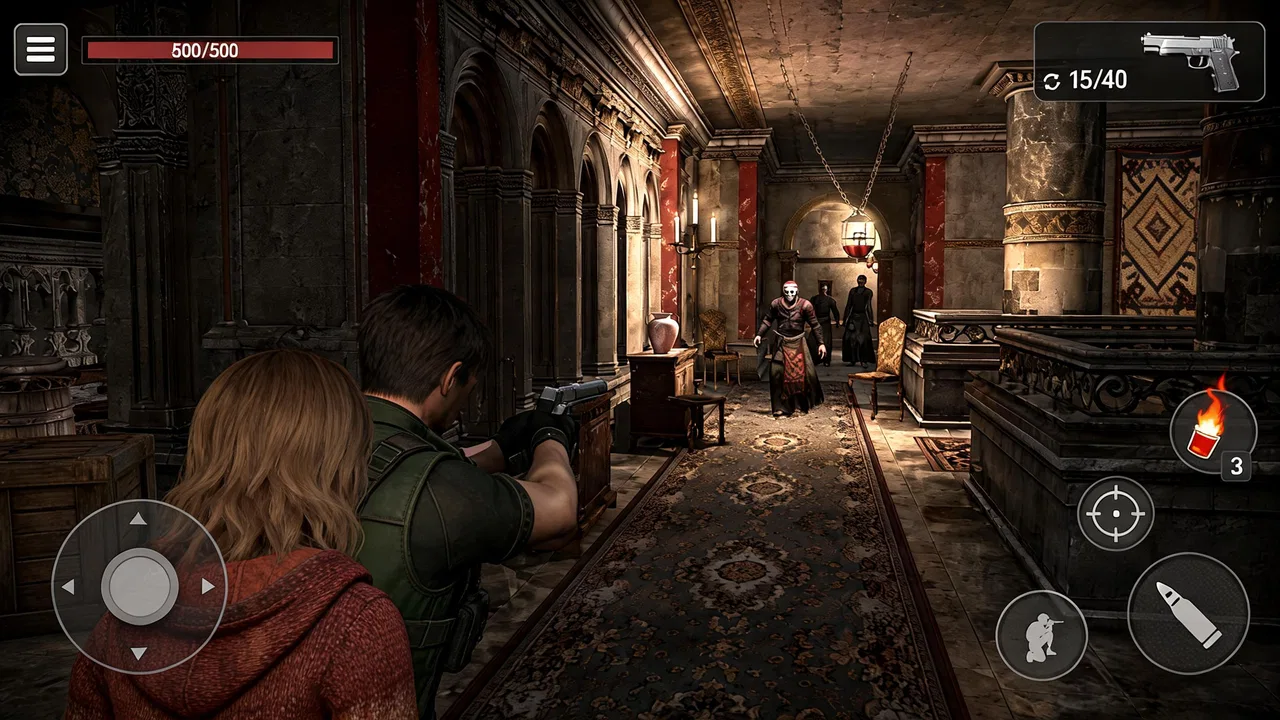
Zombie Hunter: Offline Games is an action-packed mobile game where players take on the role of a skilled survivor amidst a zombie apocalypse. The game offers a variety of weapons and missions, challenging players to eliminate zombie hordes and survive in a post-apocalyptic world. It’s available for both Android and iOS platforms.
02Is Zombie Hunter: Offline Games free to play?
Yes, Zombie Hunter: Offline Games is free to download and play. However, the game includes in-app purchases that allow players to buy additional weapons, upgrades, and other items. These purchases can enhance gameplay but are not necessary to enjoy the full game experience.
03Does Zombie Hunter: Offline Games require an internet connection?
No, Zombie Hunter: Offline Games is designed to be played offline, making it perfect for users who want to enjoy gaming without the need for an internet connection. However, some features, such as updates or in-app purchases, may require occasional internet access.
04What are the main features of Zombie Hunter: Offline Games?
The game features an extensive arsenal of weapons, immersive 3D graphics, and a variety of challenging missions. Players can enjoy strategic gameplay, upgrade their skills, and experience a post-apocalyptic storyline. The intuitive controls and engaging scenarios are designed to keep players entertained for hours.
05Are there any age restrictions for playing Zombie Hunter: Offline Games?
Yes, Zombie Hunter: Offline Games is rated for users aged 17 and up due to its intense violence and mature themes. Parents should consider these factors when allowing younger players to download and engage with the game. Always check the app store ratings for more detailed information.
Pros
- Immersive graphics enhance gameplay.
- Varied weapons for diverse strategies.
- Offline mode saves data usage.
- Challenging missions keep it engaging.
- Regular updates with new content.
Cons
- In-app purchases can be costly.
- Occasional ads interrupt gameplay.
- Limited storyline depth.
- Battery consumption is high.
- Some levels are repetitive.

Zombie Hunter: Offline Games
Gallery